We had the honor to present the concept of "The horse" at two conferences.
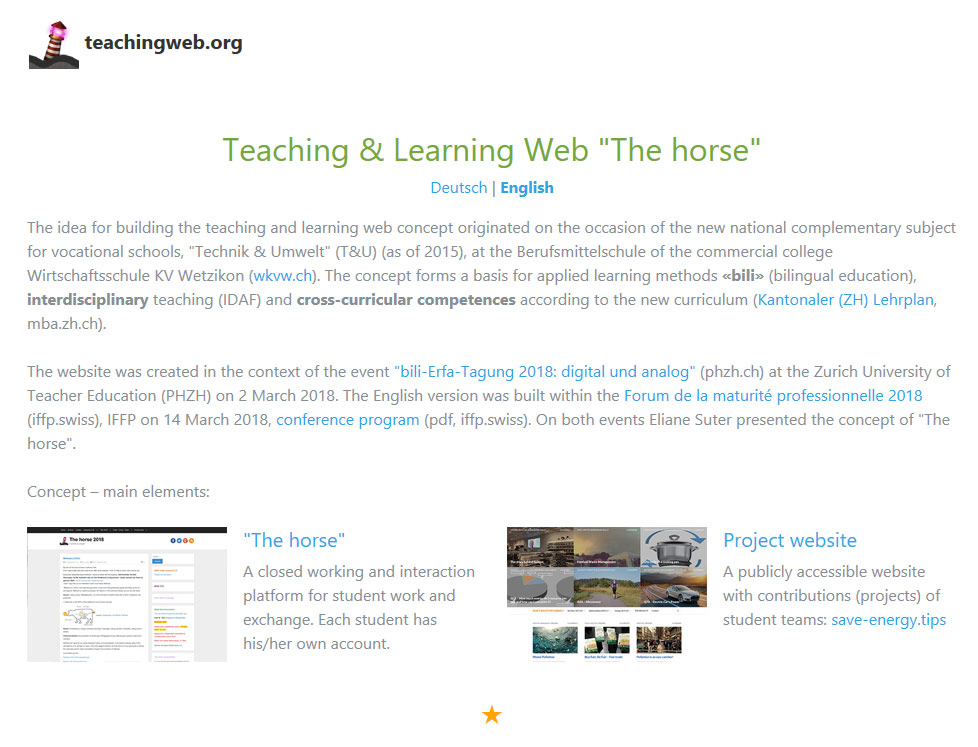 Eliane Suter delivered speeches.
The first event was the "bili-Erfa-Tagung 2018: digital und analog", a cantonal meeting at the Zurich University of teacher education (PHZH) and the 2nd took place at the national wide event "Forum de la maturité professionnelle 2018" in Martigny (VS) organized by IFFP (Institute fédéral des hautes études en formation professionnelle).
In the context of the events we created the mini website teachingweb.org containing the main info material of the concept "The horse".
Visit teachingweb.org
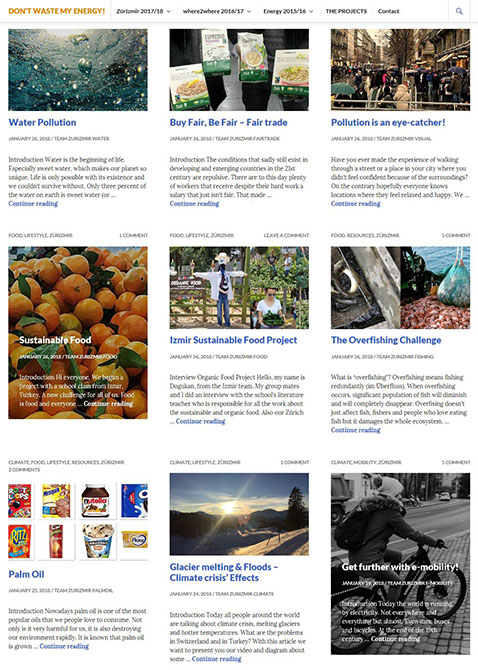 The ZürIzmir partner class project was an ambitious one in the sense of having differences in culture, language, education and infrastructure but also in respect of a relatively short time frame.
The students had the opportunity to do team research on self chosen environmental topics and experience that communication between team members (or from Zurich or from Izmir) can be a challenge. However, after having succeeded this experimental project and looking back, some lessons can be drawn for a next partner class project.
"Initiating a pilot project is similar to climbing a mountain, when you're More...
How to Swirl ?
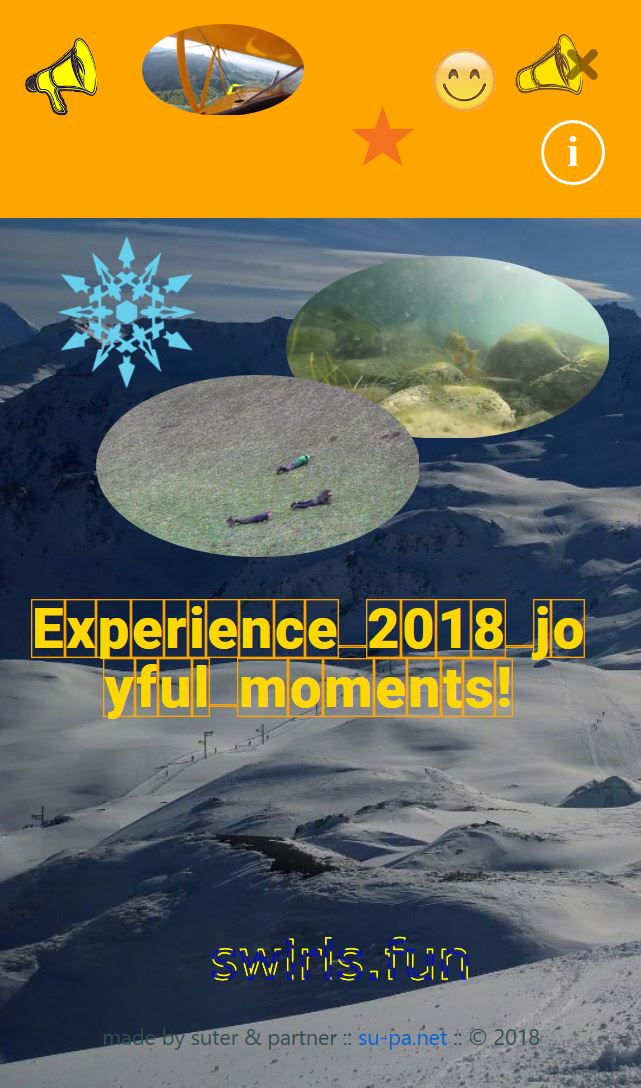 Go to www.swirls.fun, move the things around with your mouse or fingers and see what happens!
Admittedly started as a little "Happy-new-year-experiment" for you & us: "Wet, breezy, fiery, down-to-earth - the elements can be elegantly moved quite as how one might wish in everyday life." Swirls is more for us, it's a kind of concept that we like to play with and hope to find the time and people to pursue.
More lovely greetings from su-pa: 2014 2015 2016 2017 2018 2019 2020 2021 2022 2023 2025
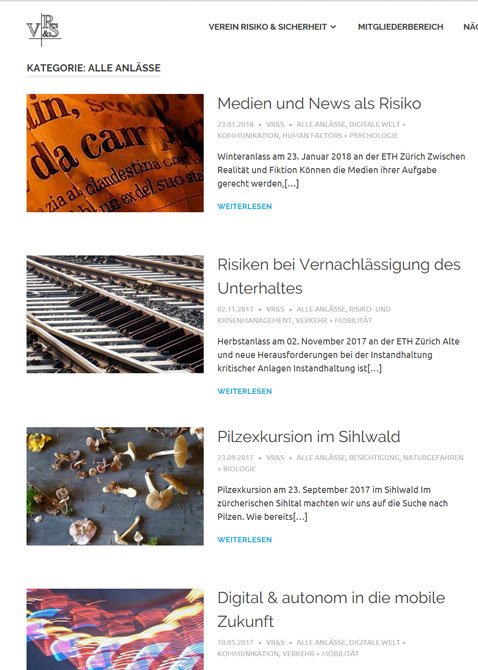 Launch of the brand new website for the VR&S - Verein Risiko & Sicherheit.
Concept, design and realization of a clear structured and member optimized responsive website containing a closed user section and a personal account for each member. The main focus has been placed on the past and future events arranged by the organisation board of the Risk & Safety Association.
Website: risikosicherheit.ch
Since 1997 - VR&S has been founded by graduates and lecturers of the postgraduate course "Risk and safety of complex systems" at ETH Zurich, University of St. Gallen and EPFL Lausanne.
... an uncommon new Feldenkrais practice
in Uster and Zurich, Switzerland: Website, videos, business card and flyer – concept "creating opportunities", design & realization
Website: feldenkrais-borghetti.ch
Equipped with a GoPro and a Canon Legria we caught some spring's afternoon moments and produced four short video sequences that can be exchanged easily.
Moods and flowing movements - here is a little taste!